About Denny
I grew up in Los Angeles and graduated from Loyola Marymount University. My first break in the film business came in 1982 as a set decorator on a dark comedy called "Eating Raoul." Over the years, I tried to figure out what I really wanted to do. I worked as a lighting technician in the heyday of MTV videos and then later traveled the world as a grip and location producer for IMAX films. I filmed under the most challenging conditions, from shark-infested waters of Australia to the plains of Africa. I was sent to cover the eruption of Mt. Pinatubo in 1993 and later covered the catastrophic earthquake in Kobe, Japan.
But nothing was more challenging than making my first film. In 1996, I embarked on the documentary 'The Wrecking Crew'. It was the story of the Session players of the 1960s in Los Angeles. This was not just a film for me but a deeply personal journey. One of those musicians, Tommy Tedesco, and guitarist was my father, who was passing away at the time when we started filming. I had always wanted to tell the story of my father and his friends, who later became known as the 'Wrecking Crew,' but time was of the essence. They gave my father 11 months to live.
My biggest fear was that I would later regret not going for it. I didn't want 'I should have to be over my head. So, I swiftly assembled a small film crew to start filming my father before he passed. My father passed in November 1997 without seeing a frame of film. In 1998, I only had a 10-minute teaser to try to raise the money to make a film. I knew this story's beginning, middle, and end, and I was determined to raise the interest and money to continue filming.
There was always interest but with a caveat: " This is great, but you'll never be able to release a film like this for many reasons, mainly because the music licensing will cost more than the film will ever make."
From 1998 to 2006, I slowly continued filming the various musicians and artists for the documentary when my wife and producer said, 'Did we make the most expensive home movie ever?' We had gone into debt with our credit cards.
CROSSING 1st Line in Sand
We needed to make this a movie. I describe it as owning a property overlooking the ocean. You have the property and the house's plans, appliances, and fixtures, but you can only sell it once you build it. So, we went further into debt, cutting the feature doc for the film festivals in 2008. This was a risky move, but it was a testament to our unwavering belief in the project and our determination to see it through, no matter the cost.In 2008/2009, the film won over a dozen awards, sold-out audiences, and amazing reviews. But there were no takers. To release this film to the public, we would need to license the music, photos, and stock footage ahead of time, which cost over $500,000.
CROSSING 2nd Line in Sand
If the film had come out in festivals with mixed reviews and no awards, I would have packed it up, but I knew I at least gave it my best effort. But it was the opposite. So, what do I do with a dozen Audience Awards and 100K in debt?I had to figure out how to raise $500,000 to pay off the licensing, a daunting task. I explored various avenues, from seeking sponsorships to organizing fundraising events. It was challenging and time-consuming, but I was determined to clear any licensing issues and ensure the film's release.
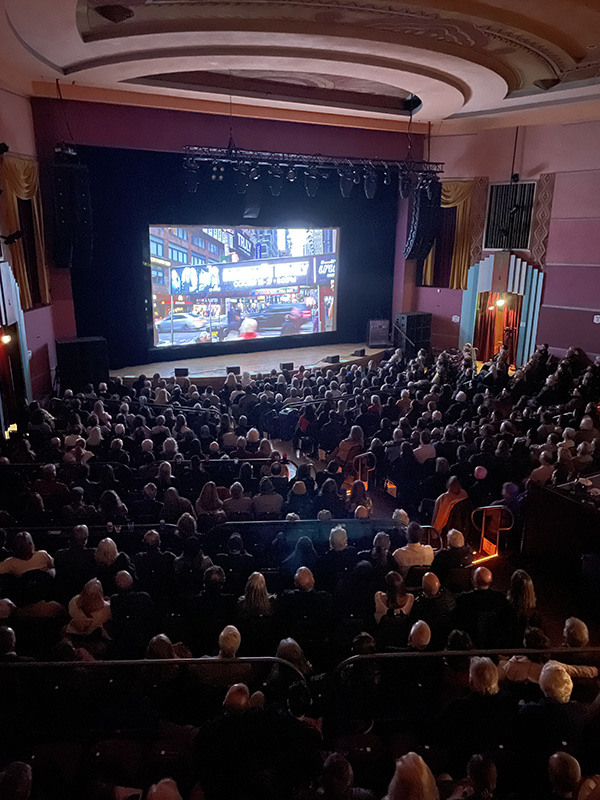
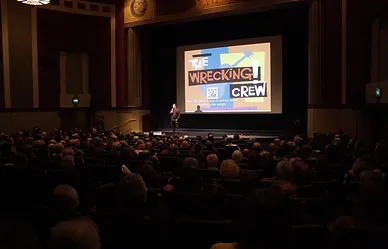 Barnstorming around the country, I created events to share the film. We showed the movie in theaters, churches, synagogues, schools, recording studios, music stores, and even homes. If I raised $10.00 or $10,000 for a screening, I took that money and paid off songs. This grassroots approach to promotion and engagement was not just a necessity due to our limited budget; it also gave us a chance to reach as many people as possible with these stories and build a fan base.
I found sponsors from hotels and restaurants, car dealerships, and dog groomers. I would put their name on the pre-show and give them tickets in return for their donations. After 5 years of donations from $5.00 to $50,000, we made our goal.
In 2015, Magnolia Films released the 'Wrecking Crew' in theaters worldwide and on Netflix. It took 19 years, but it worked.
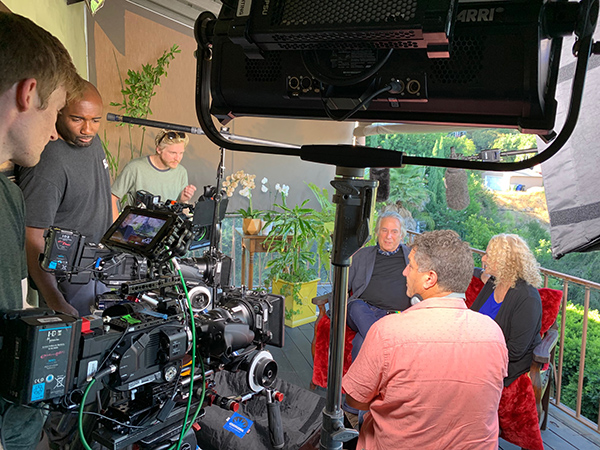
I had been hesitant to make a follow-up to "The Wrecking Crew," but in 2019, I was approached with the idea of "The Immediate Family." I didn't think twice. "The Immediate Family consists of Danny 'Kootch' Kortchmar on Guitar, Leland Sklar on Bass, Russ Kunkel on Drums, Waddy Wachtel, and Steve Postel on Guitars. They were at the 'Singer-Songwriter Era' genesis in the 1970s.
The opening line in The Wrecking Crew states, "This is the story of my father and his extended family, The Wrecking Crew."
Well, Immediate Family proved my point. The musicians in these films have reached a success that only many of us could dream of. But what they have with all musicians is their brotherhood and sisterhood -- a bond that can only be united over 50 years. They become family.
There is a similarity between the generations of musicians. However, where they differ is why the Immediate Family story must be told. These guys in their mid-70s are recording, playing, and loving it like they were in their 20s.
In many documentaries, interviews take time to be booked, as the artists and management can decide if they want to participate in this project. Within five days of taking the project, we had booked Carole King, James Taylor, Linda Rondstadt, Jackson Browne, Phil Collins, Don Henley, Stevie Nicks, and David Crosby.
Each one of these legends felt the same way as the band. They were all family on a musical journey that continues today.
With the success of the 'Wrecking Crew,' Immediate Family was produced with the help of investors and picked up by Magnolia Films. It can now be seen on HULU TV.
I continue to produce content for other directors but continue to find other stories I would like to share with others.
I'm currently working on the story of Wolfman Jack. Due out in 2025.